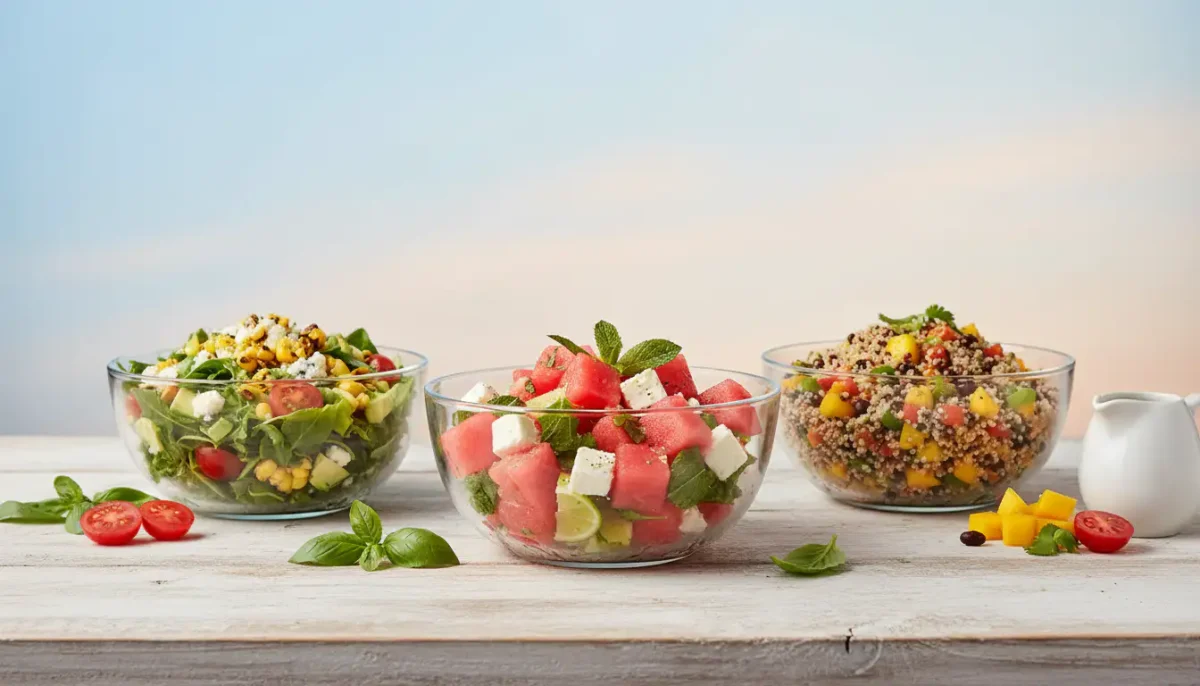
are the ultimate way to embrace the vibrant flavors and refreshing textures of the sunniest season of the year. When the mercury rises, the last thing anyone wants is to stand over a hot stove for hours. Instead, we turn to the crisp, hydrating, and colorful bounty that local farmers’ markets provide during these months.

Whether you are hosting a backyard barbecue, packing a picnic for the park, or simply looking for a quick and healthy weeknight dinner, mastering the art of the salad is essential. In this guide, we will explore over 50 ideas and techniques to ensure your Summer Salads are never boring, always nutritious, and perfectly satisfying.
Why Summer Salads Are the Essential Warm-Weather Meal
There is a biological reason why we crave Summer Salads as soon as the weather turns warm. Our bodies naturally look for ways to regulate internal temperature, and the food we consume plays a massive role in that process.
The Nutritional Benefits of Seasonal Produce
Eating seasonally isn’t just a culinary trend; it is a nutritional powerhouse. During the summer, vegetables like tomatoes, bell peppers, and zucchini reach their peak vitamin content because they are harvested at the height of their ripeness. For instance, a sun-ripened tomato in July contains significantly more vitamin C and lycopene than a hothouse tomato in January.
Hydration is another critical factor. Many ingredients found in Summer Salads, such as cucumbers, radishes, and celery, are composed of over 95% water. Consuming these “water-dense” foods helps maintain your hydration levels far more effectively than processed snacks ever could. According to the , choosing local produce also ensures you are getting the freshest possible nutrients.
Furthermore, prioritizing Summer Salads supports your local agricultural community. By buying what is in season, you reduce the carbon footprint associated with long-distance food transport. It is a win-win for your health and the planet.
Staying Cool: The Science of Light Eating
Have you ever felt sluggish after a heavy meal on a hot day? That is because digestion is a thermogenic process. When you eat heavy, calorie-dense foods, your body has to work harder to break them down, which actually increases your internal body temperature.
In contrast, Summer Salads provide a “light” energy source. They are rich in complex carbohydrates and fiber that provide a steady release of energy without the “afternoon slump” often caused by heavy pastas or greasy meats. The psychological appeal of a vibrant, colorful plate also cannot be understated; we “eat with our eyes” first, and nothing looks more inviting in the heat than a bright bowl of greens and berries.
Mastering the Base: Choosing Your Greens and Grains
The foundation of all great Summer Salads starts with the base. While lettuce is the traditional choice, the modern salad landscape is much broader and more exciting than a simple bag of pre-mixed greens.
Beyond Iceberg: Exploring Leafy Varieties
If you want to elevate your Summer Salads, it is time to move beyond standard iceberg lettuce. Consider the peppery bite of arugula, which acts as a perfect foil to sweet additions like strawberries or grilled peaches. Arugula is rich in nitrates, which can help improve blood flow and lower blood pressure during outdoor activities.
For events like BBQs where food might sit out for a while, choose “hardy” greens. Kale, radicchio, and shredded cabbage are excellent because they don’t wilt quickly under dressing. In fact, a kale-based salad often tastes better after it has marinated for an hour. To finish your dish, incorporate microgreens. These tiny plants are concentrated versions of their adult counterparts, offering up to 40 times more nutrients per gram.
Building Substance with Summer Salads Grains
Sometimes a leafy green just isn’t enough to keep you full. This is where grains come in. When building substance with Summer Salads grains, quinoa is a top choice. The secret to fluffy quinoa is to rinse it thoroughly before cooking and to let it steam with the lid on for five minutes after the water has been absorbed. This prevents it from getting soggy when you add your vinaigrette.
For those who prefer a chewier texture, farro and pearl barley are fantastic options. They provide a nutty flavor that pairs beautifully with roasted summer vegetables. If you are catering to a crowd with dietary restrictions, gluten-free alternatives like wild rice or buckwheat (soba) noodles can make your Summer Salads inclusive and satisfying for everyone. Check out this guide on refreshing honey lime chicken avocado bowl for more grain-prepping tips.
Pasta Salad Reimagined
Pasta salad is a staple of the season, but it often gets a bad reputation for being heavy and mayo-laden. You can reinvent this classic by selecting the right shapes. Fusilli, farfalle (bowtie), and rotini are ideal because their nooks and crannies hold onto light vinaigrettes perfectly.
- Always cook your pasta “al dente.” It will continue to soften slightly as it absorbs the dressing.
- Rinse the pasta under cold water immediately after draining to stop the cooking process.
- Try lower-carb alternatives like chickpea pasta or “zoodles” (zucchini noodles) for a lighter take.

The Sweet and Savory Fusion: Fruit-Based Salads
One of the best things about Summer Salads is the opportunity to mix sweet and savory flavors. Fruit in a salad provides a refreshing burst of acidity and natural sugar that balances out salty cheeses and earthy greens.
Stone Fruit and Soft Cheese Pairings
Summer is the peak season for stone fruits like peaches, nectarines, and plums. One of the most sophisticated Summer Salads you can make is a grilled peach and burrata salad. Simply brush peach halves with a little olive oil, grill them for 2 minutes per side, and serve them over arugula with a ball of creamy burrata cheese and a drizzle of balsamic glaze.
Plums also pair exceptionally well with goat cheese. The tartness of the plum cuts through the richness of the cheese, especially when topped with toasted pecans for added crunch. The role of acidity—whether from the fruit itself or a lemon-based dressing—is vital in balancing these sweet profiles.
Melon Magic: Watermelon, Cantaloupe, and Honeydew
Nothing screams summer like watermelon. The classic combination of watermelon, feta, and mint is legendary for a reason. It is the ultimate hydrating dish. For a more savory twist, try prosciutto-wrapped cantaloupe served over a bed of baby spinach with a light honey-lime dressing.
If you want to experiment with Mexican flavors, use lime juice and Tajin (a chili-lime seasoning) on a mix of honeydew and cucumber. This creates a spicy, refreshing kick that is common in street food but works beautifully in structured Summer Salads.
Berries and Nuts for Texture
Berries add a jewel-toned beauty to any bowl. A spinach salad with sliced strawberries, poppyseed dressing, and slivered almonds is a crowd-pleaser. If you prefer something bolder, try combining blueberries with sharp blue cheese and walnuts. The contrast between the sweet berry and the pungent cheese is unforgettable.
Quick Tip: You can easily candy nuts at home to add a professional-grade crunch to your fruit-forward bowls. Simply toss walnuts or pecans in a pan with a little maple syrup and a pinch of salt until they are glazed and fragrant.
Protein Additions for Refreshing Summer Salads
To turn a side dish into a complete meal, you need protein. Adding high-quality protein ensures that your Summer Salads keep you satiated for hours, preventing the need for mid-afternoon snacking.
Lean Proteins from the Grill
Since you likely have the grill fired up already, use it to prep your salad proteins. Lemon-herb grilled chicken strips are a classic for a reason; they add a smoky depth to a Caesar or a Garden salad. For a more “vacation” feel, try marinated shrimp or scallop skewers. Seafood is naturally light and pairs perfectly with citrusy Summer Salads.
Don’t forget about leftovers! If you had a steak dinner the night before, thinly sliced cold steak makes an incredible addition to a “Steak and Blue Cheese” salad with pickled red onions. This is an efficient way to reduce food waste while enjoying gourmet Summer Salads on a busy weekday.
Plant-Based Protein Powerhouses
You don’t need meat to make Summer Salads filling. Crispy chickpeas are a fantastic high-fiber alternative to croutons. Simply roast canned chickpeas with olive oil and spices until they are crunchy. They add both protein and a satisfying texture.
Other great plant-based options include:
- Marinated Tofu: Press and cube firm tofu, then marinate it in ginger and soy for an Asian-inspired crunch.
- Edamame: Buy them shelled and frozen for a quick addition to any green bowl.
- Lentils: Use French green lentils (Puy lentils) as they hold their shape well and add an earthy satiety to vegetable-heavy Summer Salads.

Whisking Perfection: Summer Vinaigrettes and Dressings
The dressing is the soul of the salad. While store-bought bottles are convenient, making your own dressing for Summer Salads is incredibly easy and much healthier, as it allows you to control the sugar and sodium levels. For more inspiration, check out these Mediterranean-inspired breakfast bowl.
Citrus-Based Light Vinaigrettes
In the heat of summer, heavy dressings can feel overwhelming. A light, citrus-based vinaigrette is usually the best choice. The golden rule for a balanced vinaigrette is the 3:1 ratio: three parts oil to one part acid (lemon juice or vinegar).
To make your Summer Salads stand out, experiment with different citrus profiles. Meyer lemons are sweeter than standard lemons, while blood oranges provide a stunning pink hue and a deep, floral flavor. You can emulsify these dressings without heavy mayo by adding a teaspoon of Dijon mustard or honey, which helps the oil and acid bind together into a smooth coating.
Herb-Infused Oils and Pestos
Summer is when herbs like basil, parsley, and cilantro are in abundance. You can create a vibrant green finish for your Summer Salads by blending these herbs with high-quality extra virgin olive oil. This herb oil can be drizzled over tomatoes and mozzarella for a deconstructed Caprese.
Alternatively, use a cilantro-lime pesto as a dressing for Mexican-themed corn salads. The intensity of the fresh herbs provides a “punch” that dried herbs simply cannot match. According to a , the healthy fats in olive oil actually help your body absorb the fat-soluble vitamins (A, D, E, and K) found in your salad vegetables.
Creamy but Healthy Yogurt Bases for Summer Salads
If you crave a creamy texture but want to avoid the calories of mayonnaise, Greek yogurt is your best friend. It is a protein-rich swap that works perfectly in coleslaws or potato salads. Adding a bit of lemon juice and garlic to Greek yogurt creates a “ranch-style” dressing that is light and refreshing.
Another option is a tahini-lemon dressing. Tahini, made from ground sesame seeds, offers a nutty, Middle Eastern flair that is naturally vegan and incredibly creamy. For a fruitier creaminess, blend half an avocado into your dressing; it provides heart-healthy fats and a silkiness that complements almost any of your Summer Salads.
Global Flavors: Summer Salads from Around the World
Every culture has its own version of the perfect summer dish. By looking at global recipes, you can find endless inspiration for your own Summer Salads at home.
Mediterranean Classics
The Mediterranean diet is famous for its health benefits, and its salads are no exception. The authentic Greek Horiatiki is a masterclass in simplicity: it contains no lettuce at all. Instead, it is a chunky mix of tomatoes, cucumbers, red onion, Kalamata olives, and a large block of feta cheese, dressed simply with olive oil and oregano.
In Italy, the Panzanella salad is a genius way to use up stale bread. The bread cubes soak up the juices from ripe tomatoes and balsamic vinegar, creating a texture that is both soft and crunchy. Meanwhile, Turkish Tabbouleh focuses on herbs, using vast amounts of parsley and mint with just a touch of bulgur wheat. These Summer Salads are designed to be eaten in the heat of the Mediterranean sun.
Asian-Inspired Refreshment in Summer Salads
Asian cuisines often use a balance of four key flavors: spicy, sour, salty, and sweet. The Thai Som Tum (Green Papaya Salad) is a perfect example. It uses shredded unripened papaya, chilies, lime, and fish sauce to create a dish that is incredibly refreshing and wakes up the palate.
Japanese Sunomono is another great addition to your repertoire of Summer Salads. It consists of thinly sliced cucumbers marinated in a sweet rice vinegar dressing, often served with toasted sesame seeds. For a more substantial meal, Vietnamese Rice Noodle Salad (Bun Bo Nam Bo) combines cold noodles with fresh herbs, bean sprouts, and a “nuoc cham” dressing that is light yet flavorful.
Latin American Zest
Latin American Summer Salads often feature corn, beans, and bright acidity. Mexican Esquites, or street corn salad, is a favorite. It features toasted corn kernels, cotija cheese, lime, and a touch of chili powder. It’s essentially “elote” in a bowl.
Peruvian-style Ceviche salads are another excellent warm-weather option. While traditional ceviche is raw fish cured in citrus, you can make a “ceviche salad” by adding sweet potato, large-kernel corn (choclo), and plenty of red onion to the mix. Finally, for a unique texture, try Ensalada de Nopales—a salad made from tender cactus paddles that is common in Mexico during the summer months.
Prep and Storage: Keeping Your Salads Fresh
One of the biggest challenges with Summer Salads is keeping them crisp. No one likes a soggy leaf. With a few professional tips, you can ensure your salads stay fresh for days.
The Mason Jar Method for Meal Prep
If you like to prep your meals in advance, the Mason jar method is a game-changer. The key is the specific order of layers. Always put the dressing at the very bottom. Follow the dressing with “hard” vegetables that won’t absorb the liquid, like carrots, chickpeas, or cucumbers. Then add your grains or proteins, and finally, place your delicate leafy greens at the very top.
This method keeps the greens dry and away from the moisture until you are ready to eat. When it’s lunchtime, just shake the jar or pour it into a bowl. Properly layered Summer Salads in jars can stay fresh in the fridge for up to 4 or 5 days, making them perfect for work lunches.
Food Safety for Summer Picnics
When taking Summer Salads outdoors, food safety is paramount. Bacteria can grow rapidly in temperatures between 40°F and 140°F. If you are using a dairy or mayo-based dressing, keep the salad bowl nestled in a larger bowl filled with ice. This “ice bed” technique is a staple for garden parties.
According to , the “20-minute rule” is also helpful: don’t dress your salad until 20 minutes before you intend to serve it. This prevents the acid in the dressing from breaking down the cell walls of the vegetables, which is what causes them to get limp and soggy in the sun.
Key Takeaways for the Best Summer Salads
- Eat the Rainbow: Use a variety of colors to ensure a wide range of vitamins.
- Texture is King: Always include something crunchy, like nuts, seeds, or crispy chickpeas.
- Keep it Cool: Use hydrating ingredients like cucumber and melon to help lower body temperature.
- Dress it Right: Stick to the 3:1 oil-to-acid ratio for homemade vinaigrettes.
- Protein Matters: Add grilled chicken, tofu, or lentils to turn a side into a meal.

In conclusion, Summer Salads are more than just a side dish; they are a celebration of the season’s best offerings. By experimenting with different greens, incorporating seasonal fruits, and utilizing global flavors, you can create meals that are as exciting as they are healthy. Whether you are meal prepping for the week or hosting a large gathering, these 50+ ideas provide the perfect foundation for a delicious summer. Now, it is time to head to your local market, grab the freshest produce you can find, and start tossing together your own masterpiece. Happy eating!
Ready to elevate your cooking even further? Check out our guide on grilled steak and zucchini bowl to perfectly char your salad proteins this weekend!