School Lunch Ideas
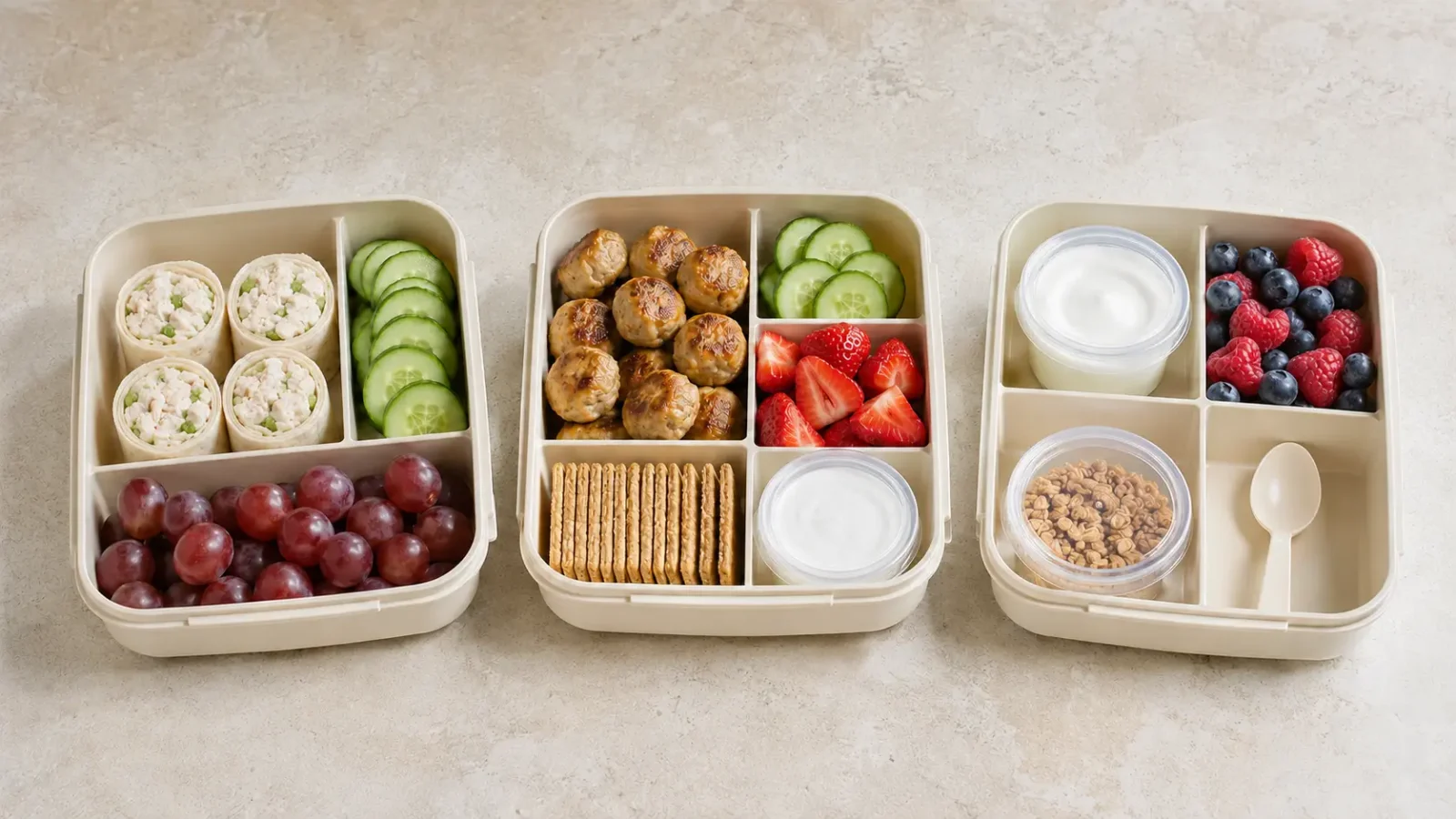
15-school-lunch-ideas-stay-fresh.
Ingredients
Equipment
Method
- Lay the tortilla flat and spread the cream cheese evenly over the surface, leaving a small border around the edge.
- Layer the turkey or chicken, cheese, and dry shredded lettuce over the tortilla. Roll it up tightly, then slice into pinwheels or leave whole.
- Place the wrap in the lunch box. Add the fruit and vegetables in separate compartments or small sealed containers.
- Pack crackers or pretzels in a dry compartment so they remain crisp until lunchtime.
- If using yogurt, hummus, cheese, poultry, or another perishable ingredient, place a frozen ice pack inside an insulated lunch bag to keep the food cold until noon.
- Keep the packed lunch refrigerated until it is time to leave for school whenever possible.
Notes
Packing school lunch every weekday can turn into a surprisingly stubborn decision. The food has to fit the lunch box, travel well, and still look worth eating several hours later. It also helps when the meal uses ingredients that can move from one lunch to the next instead of creating a new shopping list every morning.
These school lunch ideas are built around that practical reality. Some use wraps or pitas, while others lean on snack-box components, cold pasta, rice, beans, eggs, or leftover chicken. Each idea includes a packing detail that protects texture, because a crisp cracker and a dry sandwich are often more important than an elaborate presentation.
Quick answer: A useful packed lunch starts with one main item, one fruit or vegetable, and one crisp or familiar side. Keep sauces in sealed cups, place juicy produce away from bread and crackers, and use an insulated bag with adequate cold sources whenever the lunch contains perishable food.
School Lunch Ideas at a Glance
| Lunch style | Good starting point | Texture tip |
|---|---|---|
| Wrap or pita | Chicken salad, hummus, or chickpeas | Dry washed produce before assembling |
| Snack box | Cheese, egg, crackers, fruit, or vegetables | Separate wet foods from crackers |
| Cold grain bowl | Rice, pasta, couscous, or quinoa | Cool cooked ingredients before packing |
| Warm lunch | Quesadilla or leftovers | Preheat an insulated food container first |
| Sweet-and-savory box | Yogurt, fruit, cheese, and a dry side | Pack granola or cereal separately |
Before You Pack the Lunch Box
Choose the container after choosing the meal. A wrap fits best in a shallow box, while a yogurt-and-granola lunch needs a tightly sealed container plus a separate dry compartment. Small leakproof cups are useful for dips, salsa, dressing, and anything else that could soften the rest of the lunch.
Start with cold ingredients when packing a cold lunch. Cooked chicken, pasta, rice, and eggs should be chilled before they go into the lunch box. Washing produce the night before can save time, but dry it carefully so extra water does not collect around sandwiches or crackers.
Finally, keep the eater in mind. A familiar main item with one small variation often works better than a completely unfamiliar box. School allergy rules also differ, so check the current policy before packing nuts, seed butters, or foods processed around common allergens.
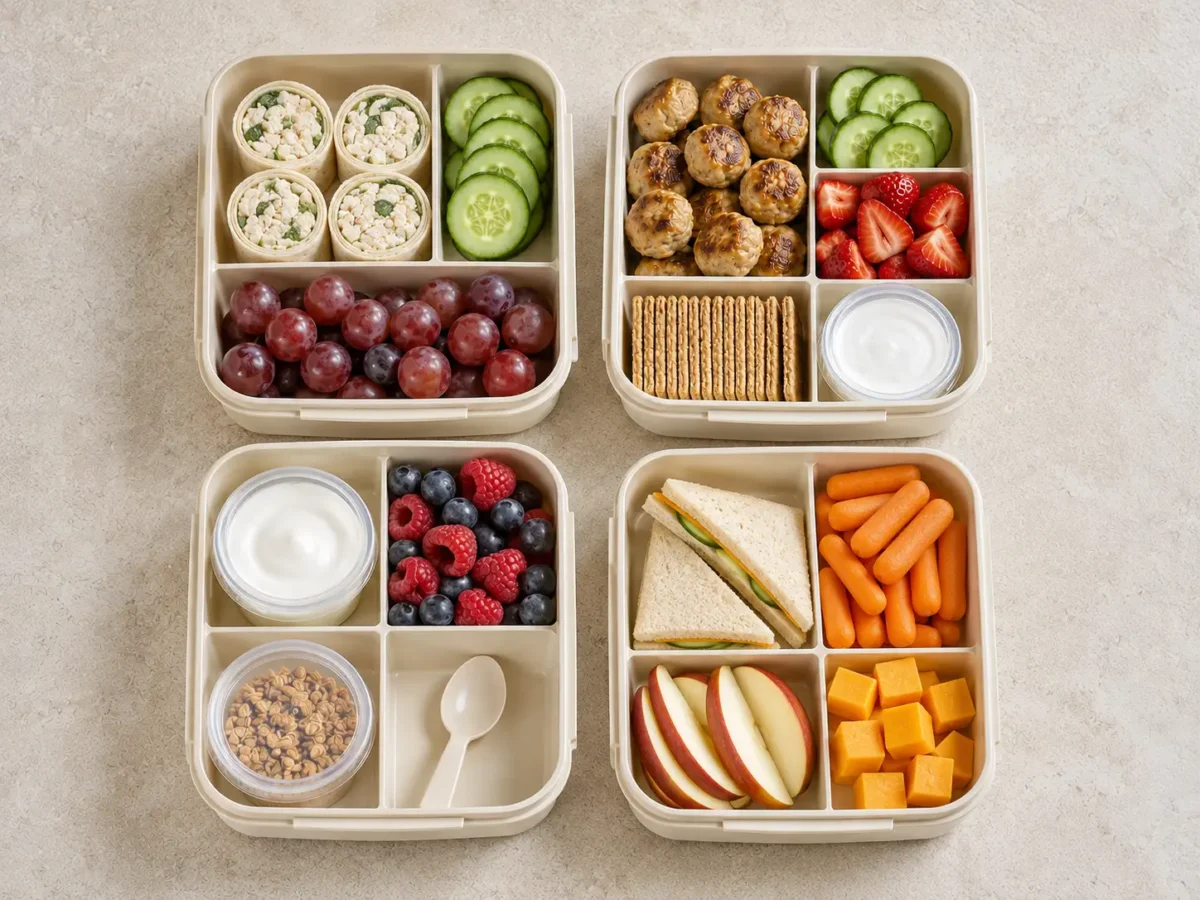
15 School Lunch Ideas to Pack This Week
1. Greek Yogurt Chicken Salad Wrap
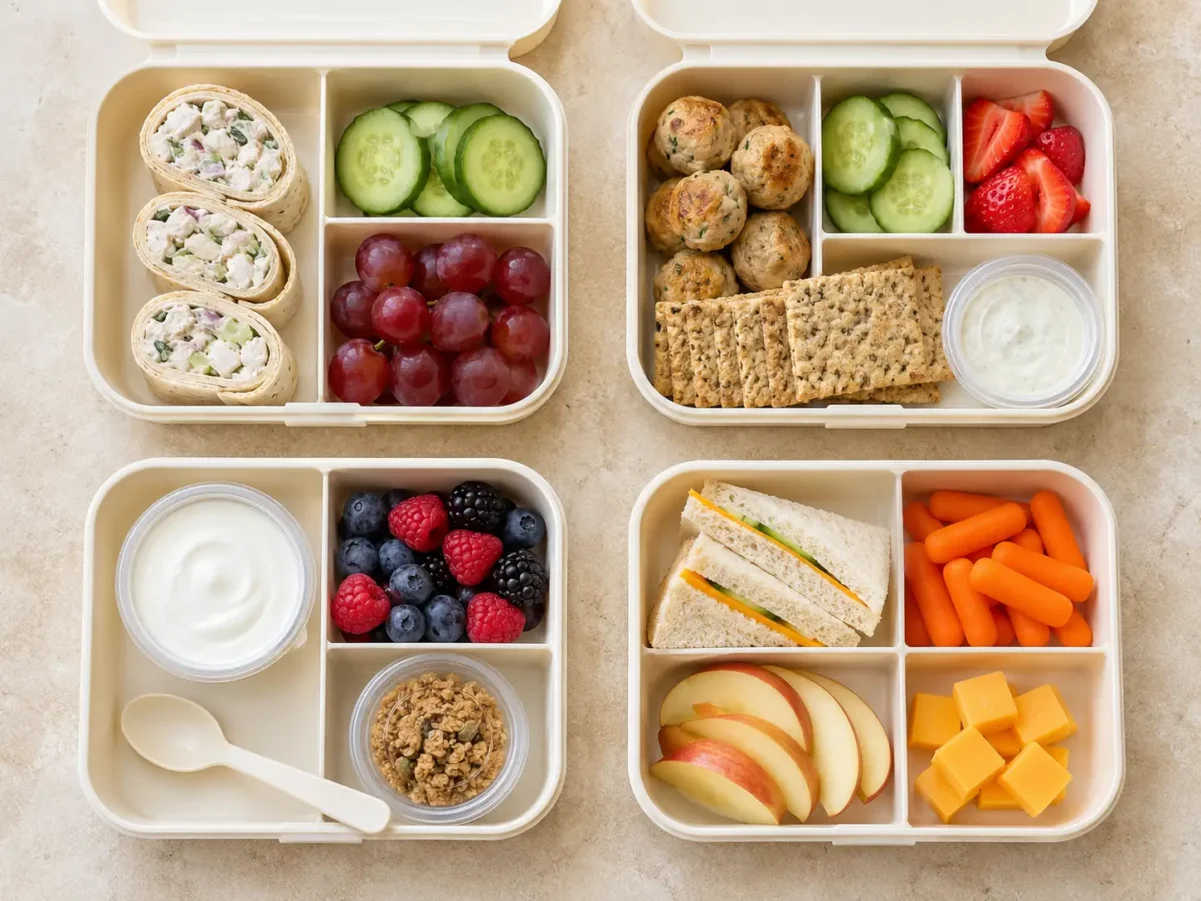
Spread a modest layer of Greek yogurt chicken salad down the center of a soft tortilla, then roll it firmly and slice it into two or three pieces. Add cucumber coins and grapes in separate compartments. If the wrap will sit for several hours, place a dry lettuce leaf between the tortilla and filling to slow moisture transfer.
2. Hummus and Vegetable Pinwheels
Cover a tortilla with hummus, leaving a narrow border, then add very thin strips of bell pepper, cucumber, and carrot. Roll tightly and cut into pinwheels. Pat every vegetable dry before assembling, and place the cut sides upright so the filling stays inside. Strawberries or an apple make an easy side.
3. Teriyaki Chicken Bento Box
Build a compact box with chilled teriyaki chicken, rice, and green beans, keeping extra sauce in a sealed cup. The step-by-step bento box meal guide offers a complete starting point. Cool the cooked components promptly before refrigerating and packing.
4. Chickpea Salad Pita
Spoon a drained chickpea salad into a small pita or pack the pita separately for filling at lunch. Cucumber, bell pepper, herbs, and a lemony dressing create contrast without requiring meat. Use the base from these chickpea salad recipes, but keep very juicy tomatoes separate when protecting the bread matters most.
5. Cheese, Crackers, and Egg Snack Box
Combine a peeled hard-cooked egg, cheese cubes, whole-grain crackers, and crisp produce such as cucumber or bell pepper. Use a paper or silicone divider between the egg and crackers. A clementine or whole apple travels better than delicate cut fruit when the lunch box may be handled roughly.
6. Sunflower Butter and Banana Roll-Up
Spread sunflower seed butter over a tortilla, add a peeled banana, and roll it tightly. Slice just before packing or leave the roll whole to reduce browning. Check the product label and the school’s allergy policy first; seed butter can be a useful alternative only when it meets the specific rules in place.
7. Herby Chicken Pita Box
Pack sliced chicken, small pita wedges, lettuce, cucumber, and a sealed cup of herby dressing. The components from these sheet pan chicken pitas can be served deconstructed so the bread stays dry. Chicken should be fully cooked, chilled, and kept cold during transport.
8. Cold Pasta and Mozzarella Box
Toss short pasta with a small amount of olive oil, halved cherry tomatoes, chopped cucumber, and mozzarella pearls. Drain the mozzarella and dry the vegetables before mixing. Pack any additional dressing on the side, especially if the lunch is prepared the night before.
9. Rice and Edamame Lunch Box
Combine chilled rice with cooked, shelled edamame, shredded carrot, and cucumber. Add a small sealed cup of soy-based dressing or another preferred sauce. Cool rice promptly after cooking and refrigerate it; do not leave it on the counter while assembling other parts of the lunch.
10. Black Bean Quesadilla Wedges
Fill a tortilla with mashed black beans and cheese, cook until the cheese melts, and let the quesadilla cool briefly before slicing. Packing it while steaming can trap condensation and soften the tortilla. Add mild salsa in a leakproof cup and whole fruit on the side.
11. Tuna and Cucumber Cracker Kit
Place tuna salad in a sealed container with cucumber slices and sturdy crackers in a dry compartment. The eater can assemble each bite at lunch, which keeps the crackers crisp. Because tuna salad is perishable, this box needs reliable cold storage from the time it leaves the refrigerator.
12. Mini Chicken Meatball Box
Pack fully cooked, chilled mini chicken meatballs with cucumber, fruit, crackers, and a sealed yogurt-based dip. Keep the dip and fruit away from the crackers. Small pieces can be convenient, but the size and texture should always be appropriate for the child’s age and eating skills.
13. Apple and Cheddar Sandwich
Layer thin apple slices and cheddar between two pieces of bread. A light coating of seed butter, cream cheese, or butter can help protect the bread from moisture, depending on school rules and personal preference. Choose a crisp apple and slice it as close to packing time as practical.
14. Yogurt, Berry, and Granola Box
Pack plain or flavored yogurt in a tightly sealed container, berries in a second compartment, and granola in a dry cup. Combining everything at lunchtime preserves the contrast between creamy yogurt and crunchy granola. Include a spoon and keep the entire box cold.
15. Blueberry Biscuit Snack Lunch
Pair a small blueberry biscuit with cheese, a hard-cooked egg, and sliced cucumber for a snack-style lunch. Let the biscuit cool completely before packing so steam does not make it damp. Keep the egg and cheese in the chilled section of the box.
How to Turn Dinner Into Tomorrow’s Lunch
Planned leftovers can make packing faster, but only when the next-day format is decided in advance. Extra cooked chicken can become a pita box, rice can become an edamame bowl, and roasted vegetables can fill quesadilla wedges. This collection of easy family dinner recipes can help you choose dinners that provide useful components for lunch.
Portion lunch ingredients into shallow containers while cleaning up after dinner, then refrigerate them promptly. Wait until morning to add crackers, bread, granola, and other foods that lose texture in the refrigerator.
How to Keep Packed Lunches Safe
Perishable foods such as cooked chicken, eggs, tuna salad, yogurt, cheese, cooked rice, and cut produce need temperature control. The USDA recommends an insulated lunch bag and at least two cold sources for perishable packed lunches. A frozen gel pack can be paired with another gel pack, a frozen water bottle, or another suitable frozen item. Read the full USDA packed-lunch safety guidance before establishing your routine.
If a refrigerator is available at school, use it on arrival. An insulated bag and cold packs slow warming, but they are not a substitute for checking the conditions in which the lunch will actually be stored. When packing hot food, use a clean insulated food container designed for that purpose and follow its manufacturer’s directions.
School Lunch Ideas: Frequently Asked Questions
Can I pack school lunch the night before?
Many components can be prepared the night before. Refrigerate perishable fillings and cooked foods, but add crackers, granola, and other dry items in the morning. Assemble bread-based items close to packing time when sogginess is a concern.
How do I keep sandwiches from getting soggy?
Dry the produce, use only a small amount of sauce, and place cheese or a dry lettuce leaf between wet fillings and bread. Packing juicy tomatoes or pickles separately also protects the sandwich.
What can I use instead of a sandwich?
Try a pita, tortilla pinwheels, cold pasta, a rice box, quesadilla wedges, a bento-style meal, or a snack box built from several small components.
What if the school is nut-free?
Follow the school’s current policy and read every package label. Seed butter may be permitted in some schools, but policies vary and cross-contact warnings still matter.
How can I make lunch easier for a selective eater?
Start with one dependable food and add one small variation rather than changing the whole lunch. Keep sauces on the side, serve foods in separate compartments, and involve the eater in choosing between two realistic options.
Final Takeaway
The most useful school lunch ideas are repeatable. Choose two wraps or pitas, two snack boxes, and one warm or leftover-based lunch for the week. Reuse fruit, vegetables, crackers, and dips across several boxes, then protect the texture with small containers and dividers.
Keep perishable foods cold, match portions and textures to the eater, and treat the list as a flexible rotation rather than a rigid meal plan. A lunch that arrives safely and still looks inviting has already done its job.
1 thought on “15 School Lunch Ideas That Stay Fresh Until Noon”