Introduction: Your Body is a Bio-Computer
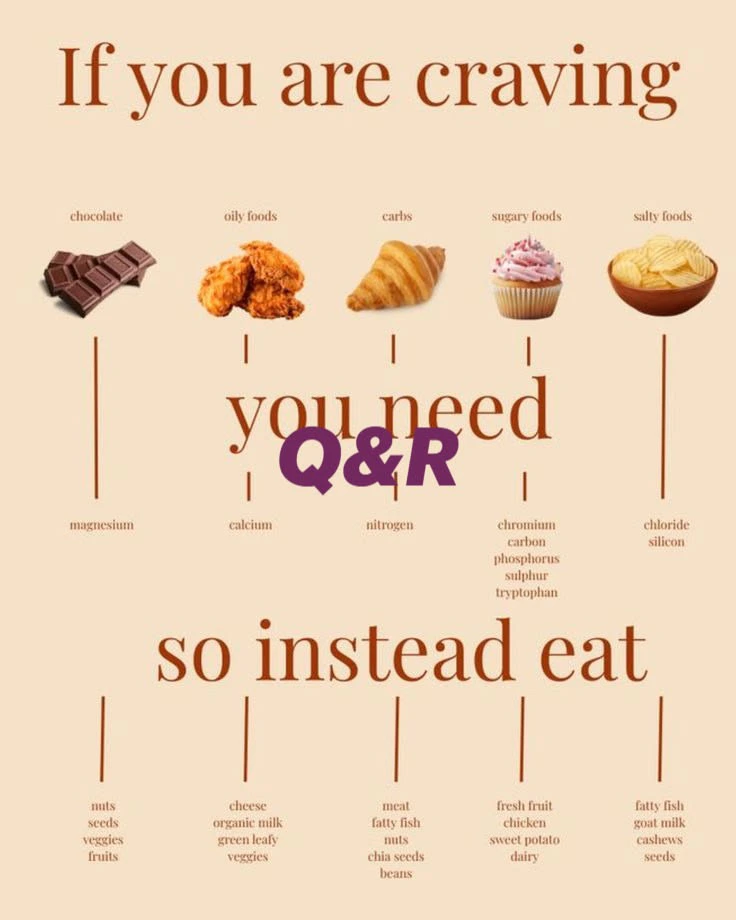
Have you ever wondered why you can eat a full meal and still find yourself hunting for a chocolate bar ten minutes later? Many people view cravings as a personal failure or a lack of self-discipline. However, as the provided infographic illustrates, cravings are often the body’s way of communicating biological needs through the language of food. Your brain isn’t necessarily asking for “junk”; it is responding to a microscopic deficit in minerals and elements like magnesium, calcium, or nitrogen.
Table of Contents
When we understand this “internal map,” we stop fighting our bodies and start fueling them. This article breaks down the five major craving categories shown in the guide and explains the science of the “Instead Eat” alternatives.
1. The Chocolate Fix: The Magnesium Connection
According to the infographic, a persistent craving for chocolate is a classic sign that your body needs magnesium.
The Science of Magnesium
Magnesium is involved in over 300 biochemical reactions in the human body. It is essential for muscle relaxation, nerve function, and energy production. When we are stressed, our bodies deplete magnesium rapidly. Because cocoa is naturally high in magnesium, your brain creates a “shortcut” and demands chocolate to fix the deficit.
The Healthy Swaps
Instead of reaching for a sugar-heavy candy bar, the guide suggests:
- Nuts and Seeds: Almonds and pumpkin seeds are magnesium powerhouses.
- Veggies and Fruits: Leafy greens and bananas provide the mineral without the blood sugar spike.
2. The Greasy Temptation: Oily Foods and Calcium
When you find yourself dreaming of fried chicken or heavy, oily foods, the infographic suggests your body is actually signaling a need for calcium.
Why Oil?
It might seem strange to link grease to a bone-strengthening mineral like calcium, but nutritional science suggests that a lack of certain minerals can trigger a desire for high-calorie, fatty “comfort foods.”
The Healthy Swaps
To satisfy this urge more effectively, the guide recommends:
- Cheese and Organic Milk: These provide direct, bioavailable calcium.
- Green Leafy Veggies: Kale and broccoli are excellent plant-based sources of calcium that help balance your internal chemistry.
3. The Carb Cycle: Nitrogen and the Protein Gap
One of the most common struggles is the craving for carbs—croissants, white bread, and pasta. The infographic reveals that this is often a sign of nitrogen deficiency.
The Nitrogen-Protein Link
Nitrogen is a primary component of amino acids, which are the building blocks of protein. When you lack nitrogen, your body is essentially starving for protein. However, because the brain knows that simple carbs provide “instant” (though temporary) energy, it tricks you into wanting bread instead of a steak.
The Healthy Swaps
To break the cycle, the guide suggests eating:
- Meat and Fatty Fish: These are the most direct sources of nitrogen.
- Chia Seeds and Beans: Excellent plant-based proteins that provide long-lasting satiety.
- Nuts: A great snack to bridge the gap between meals.
4. The Sugar Rush: A Multi-Mineral Crisis
Craving sugary foods like cupcakes is the most complex signal on the map. The infographic states that sugar cravings can indicate a lack of chromium, carbon, phosphorus, sulphur, or tryptophan.
The Biochemistry of Sweetness
- Chromium: Helps regulate blood sugar levels. Without it, you experience “lows” that make you reach for candy.
- Tryptophan: The precursor to serotonin (the happiness hormone). We often eat sugar to get a “mood boost” when tryptophan is low.
The Healthy Swaps
The guide offers several nutrient-dense alternatives:
- Fresh Fruit: Provides natural sugars bundled with fiber.
- Chicken and Dairy: These provide the tryptophan and phosphorus needed to stabilize your mood.
- Sweet Potato: A slow-burning carb that kills sugar urges.
5. The Salt Obsession: Chloride and Silicon
If you can’t stop eating chips and salty foods, your body is likely looking for chloride or silicon.
The Electrolyte Balance
Chloride is a key component of stomach acid and is vital for maintaining the balance of fluids in your cells. Silicon is essential for bone health and skin elasticity.
The Healthy Swaps
Instead of processed table salt, the infographic suggests:
- Fatty Fish and Goat Milk: These provide natural minerals that hydrate the body.
- Cashews and Seeds: These offer a savory crunch while replenishing your silicon and mineral stores.
Conclusion: How to Master Your Health
By using this infographic as a reference, you can stop “dieting” and start “tuning” your body. The next time a craving hits, refer to the “Instead Eat” section. Within 15 to 20 minutes of eating the healthy substitute, you will likely find that the original craving has vanished because your cells have finally received the minerals they were actually asking for.