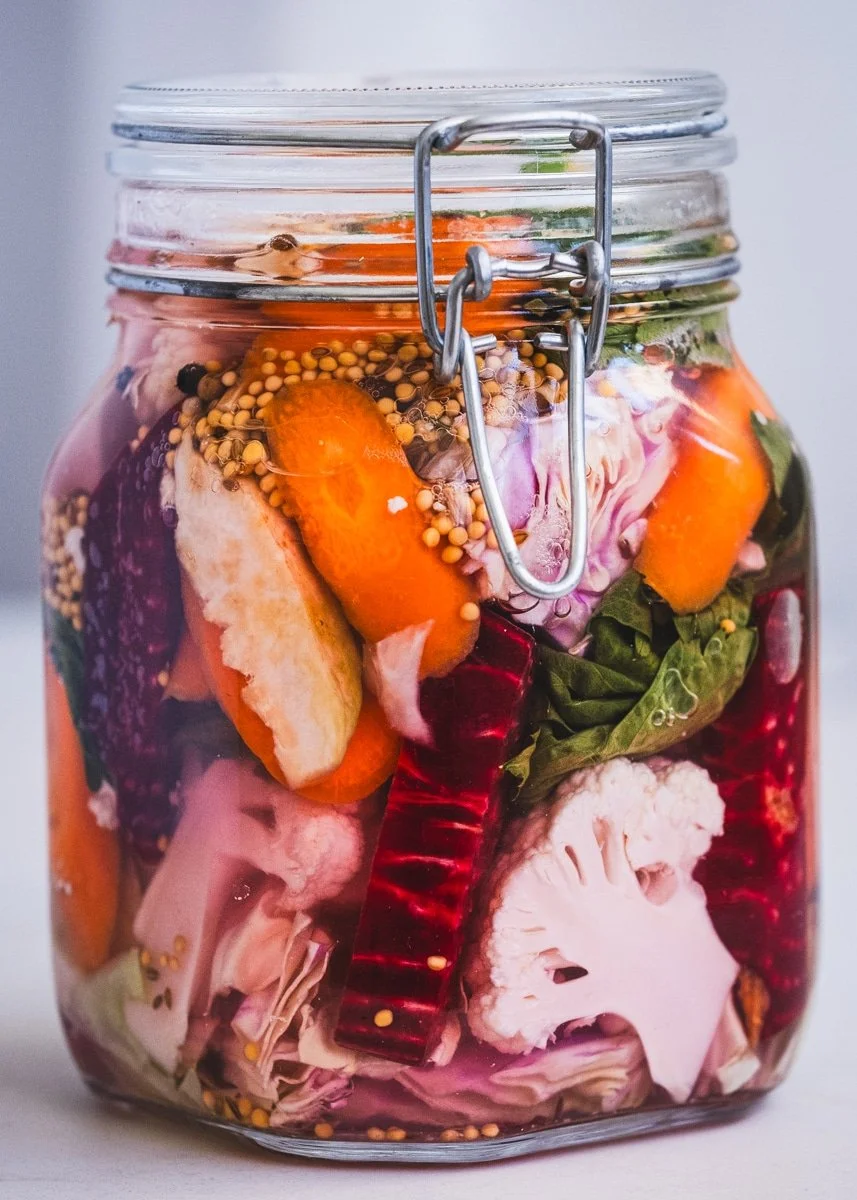
Why make this recipe
Fermented vegetables add bright sour flavor and healthy bacteria to your food. They cost little and keep well. You can eat them as a snack, with meals, or add them to sandwiches. They fit easily with simple meals like easy creamy smothered chicken and rice dinner recipe for a quick, balanced plate.
Introduction
Mixed fermented vegetables are easy to prepare. You only need a few jars, water, salt, spices, and fresh vegetables. The process is mostly hands-off once jars are filled. These pickles go well with toast, bowls, and many quick recipes such as avocado toast easy recipes.
How to make Mixed Fermented Vegetables
Clean jars and tools with hot water. Cut vegetables into bite-size pieces. Pack the jars with mixed vegetables and herbs. Make a salty brine and pour it to cover everything. Keep the vegetables pressed below the brine to avoid mold. Let jars sit at room temperature and check them every day. When the taste is tangy enough, move jars to the fridge. For a meal idea that pairs well, try these vegetables with simple seafood dishes like easy shrimp and rice recipes.
Ingredients :
1L spring water, 40 grams non-iodized salt (kosher salt, sea salt, or Himalayan pink salt), 2-3 teaspoons of spice mix (mustard seeds, fennel seeds, black peppercorns, bay leaves, etc.), Vegetables: 1/2 small cauliflower, 1/4 to 1/2 cabbage head, 2 carrots, 1 small beetroot, 1 small celeriac, a few celery leaves, 2-3 small green tomatoes, Optional: Fresh horseradish root, chili or red pepper flakes
Directions :
Start by cleaning the jars thoroughly.
Prepare the spice mix.
Wash and cut vegetables into smaller pieces.
Stuff the jars with the mix of vegetables.
Create the brine by mixing spring water, salt, and spices until dissolved.
Pour the brine over the stuffed vegetables, ensuring they are submerged.
Cover the jars loosely to allow air in and let ferment at room temperature.
Check taste after 5-7 days.
Once fermented to your liking, seal the jars and store in the fridge.
How to serve Mixed Fermented Vegetables
Serve them cold or at room temperature. Add a spoonful to sandwiches, salads, grain bowls, or tacos. They make a good side for rich dishes and help cut fat with a bright, sour note. For a party snack idea, try serving them beside dips and chips like in the best taco dip recipe.
How to store Mixed Fermented Vegetables
Seal jars tightly and keep them in the fridge after fermentation. They stay good for months if you keep vegetables submerged in brine and use clean utensils. Always smell and taste a little before serving; discard if you see mold or an off smell.
Tips to make Mixed Fermented Vegetables
Use fresh vegetables and clean jars. Keep vegetables below the brine — use a weight or a folded cabbage leaf. Taste often after day 5 to catch the right sour level. Use non-iodized salt only; iodine can slow fermentation. If you want a spicier jar, add chili flakes or fresh horseradish. These pickles go well with many meals, including comfort mains like best smothered chicken and rice recipe.
Variation (if any)
- Swap or add vegetables: green beans, bell peppers, or radishes.
- Change spices: use dill, coriander seeds, or turmeric.
- Add sweetness: a small apple slice or a carrot will add mild sweetness.
- Make a quick ferment: leave 2–3 days for a mild tang.
FAQs
Q: How long does fermentation take?
A: It usually takes 5–14 days at room temperature. Warmer rooms speed it up. Taste after day 5.
Q: Do I need special jars?
A: No. Clean glass jars work fine. Use a weight or small jar to keep vegetables under brine.
Q: Can I use table salt?
A: Do not use iodized table salt. Use kosher, sea salt, or Himalayan pink salt for best results.
Q: What if I see bubbles or foam?
A: Bubbles are normal. A little white foam (kahm yeast) is usually harmless. Remove foam and keep vegetables under brine. Throw away jars with mold that is fuzzy or colored.
Q: Can children eat fermented vegetables?
A: Yes, in small amounts. Start with a small spoon to check tolerance to the sour taste.
Conclusion
For a clear step-by-step guide with photos, see the Creative in My Kitchen fermented mixed vegetables guide.
For another home method and tips, read the DIY Fermented Vegetables Recipe from Desi~licious RD.
If you want a tested recipe from a cooking site, try the Kitchn lacto-fermented pickled vegetables recipe.
For general fermentation basics and troubleshooting, visit How to Ferment Vegetables – Make Your Own Fermented Vegetables.
To learn about pickling spices and their use in fermenting, see Make Fermented Vegetables With Pickling Spice.
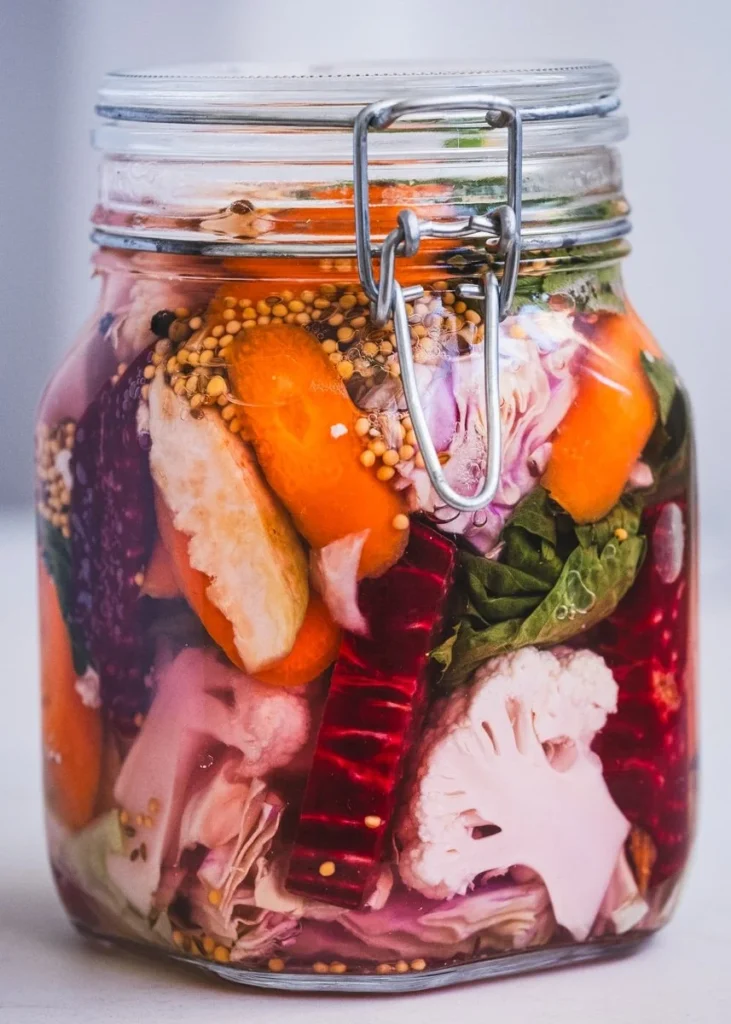
Mixed Fermented Vegetables
Ingredients
For the Brine
- 1 L spring water
- 40 grams non-iodized salt Use kosher, sea salt, or Himalayan pink salt.
- 2-3 teaspoons spice mix Include mustard seeds, fennel seeds, black peppercorns, bay leaves, etc.
Mixed Vegetables
- ½ small cauliflower Cut into bite-size pieces.
- ¼ to ½ head cabbage Cut into bite-size pieces.
- 2 carrots Cut into smaller pieces.
- 1 small beetroot Cut into smaller pieces.
- 1 small celeriac Cut into smaller pieces.
- a few celery leaves
- 2-3 small green tomatoes Cut into smaller pieces.
- Optional: Fresh horseradish root or chili/red pepper flakes
Instructions
Preparation
- Start by cleaning the jars thoroughly.
- Prepare the spice mix.
- Wash and cut vegetables into smaller pieces.
- Stuff the jars with the mix of vegetables.
- Create the brine by mixing spring water, salt, and spices until dissolved.
- Pour the brine over the stuffed vegetables, ensuring they are submerged.
- Cover the jars loosely to allow air in and let ferments at room temperature.
- Check the taste after 5-7 days.
- Once fermented to your liking, seal the jars and store in the fridge.