Easy Peach Jam Recipe Without Pectin
This easy peach jam recipe transforms ripe summer peaches into a bright, soft-set spread using only peaches, sugar, and lemon juice. It is a small-batch refrigerator jam, so you do not need commercial pectin, specialized canning equipment, or a water-bath canner.
Food Safety Note: This reduced-sugar peach jam is intended for refrigerator or freezer storage. It has not been tested for shelf-stable canning and should not be stored at room temperature. The National Center for Home Food Preservation recommends refrigerating or freezing experimental reduced-sugar fruit spreads rather than applying canning instructions from a different recipe.
Quick Answer
To make peach jam without pectin, cook peeled and chopped peaches with sugar and lemon juice until the fruit softens and enough moisture evaporates to create a thick, spreadable consistency. Test the jam on a chilled plate, allow it to cool completely, and store it in the refrigerator.
Because peaches contain relatively little natural pectin, this reduced-sugar recipe produces a soft-set spread rather than the firm gel associated with commercial pectin. Oregon State University Extension recommends commercial pectin when a reliably firm peach gel is the goal. This recipe intentionally uses a simpler refrigerator method instead.
Why You’ll Love This Peach Jam
- Only three ingredients: You need ripe peaches, granulated sugar, and fresh lemon juice.
- No commercial pectin: The mixture becomes spreadable as the fruit cooks and excess moisture evaporates.
- Small-batch method: It is practical when you have a few ripe peaches rather than an entire harvest.
- Beginner-friendly: No specialized preserving equipment is required.
- Fresh peach flavor: The modest amount of sugar allows the natural fruit flavor to remain noticeable.
- Easy to customize: Leave a few peach pieces for texture or mash the fruit thoroughly for a smoother finish.
- Freezer-friendly: Extra jam can be stored in an appropriate freezer-safe container.
Ingredients You’ll Need
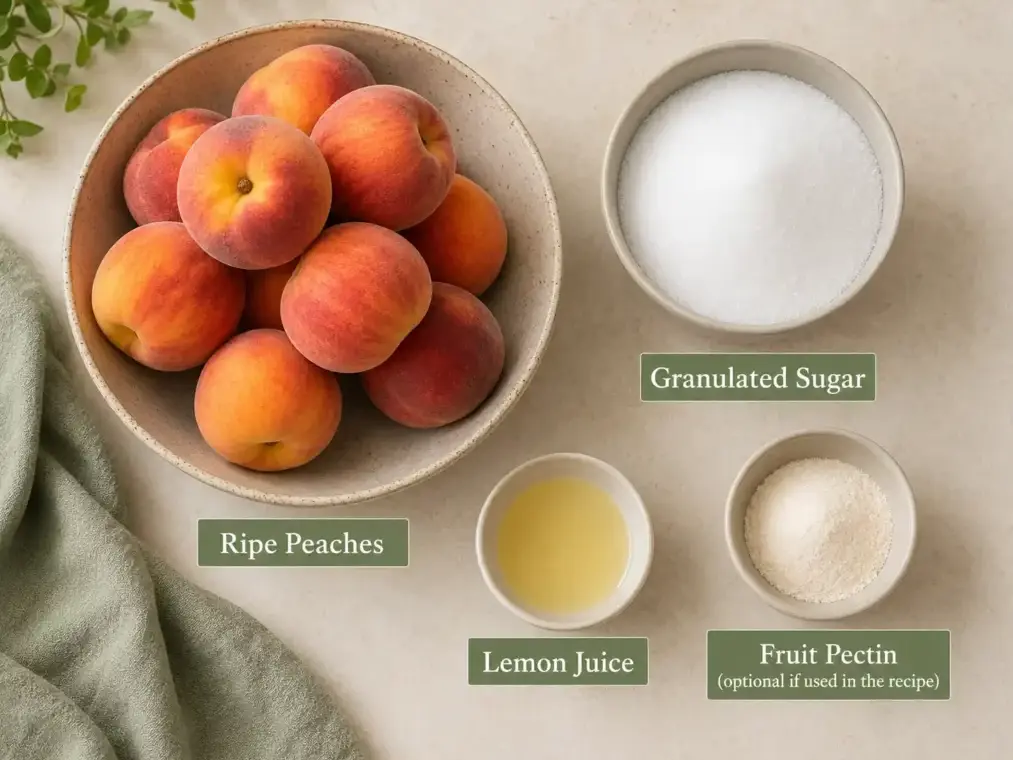
- 2 pounds ripe peaches: After peeling, removing the pits, and chopping, you should have approximately 4 cups of prepared fruit. Choose fragrant peaches that yield slightly when gently pressed.
- 3/4 cup granulated sugar: Sugar sweetens the peaches and helps the mixture become thicker as moisture evaporates.
- 1 tablespoon fresh lemon juice: Lemon juice balances the sweetness and brightens the peach flavor.
Texture note: Peaches are naturally low in pectin compared with many fruits commonly used for jam. According to Oregon State University Extension, commercial pectin is generally recommended when making firmly gelled peach products. Without it, expect a softer, spoonable spread.
Choosing the Best Peaches
Use ripe, flavorful peaches for the best jam. The fruit should smell fragrant and feel slightly soft when pressed, but it should not be bruised, fermented, or extremely mushy.
Underripe peaches may produce a less flavorful jam. Very soft and watery peaches can increase the cooking time because more liquid must evaporate before the mixture thickens.
Fresh or Frozen Peaches
Fresh peaches provide the brightest flavor and the most defined fruit texture. They are the best choice when peaches are in season and fully ripe.
Frozen peaches can also be used when fresh fruit is unavailable. Thaw them completely, drain any excess liquid, and measure the fruit after thawing. Frozen peaches generally release more moisture and may require a few additional minutes of cooking.
Avoid peaches packed in heavy syrup. The added sugar and liquid can make the jam overly sweet and more difficult to reduce to the intended consistency.
Do You Need to Peel the Peaches?
Peeling is recommended for a smoother, more traditional jam texture. Peach skins can remain slightly chewy after cooking and may leave noticeable flecks in the finished spread.
To peel peaches easily, cut a shallow “X” into the bottom of each fruit. Lower the peaches into boiling water for 30 to 60 seconds, then transfer them immediately to a bowl of ice water.
Once the peaches are cool enough to handle, begin at the “X” and gently pull away the loosened skin. Use a small paring knife for any areas that do not release easily.
This blanching method is also used in the National Center for Home Food Preservation’s peach preparation guidance.
You can leave the skins on if you prefer a more rustic texture. Finely chop the peaches or carefully blend the cooked mixture with an immersion blender to reduce the size of visible skin pieces.
How to Make Peach Jam Without Pectin
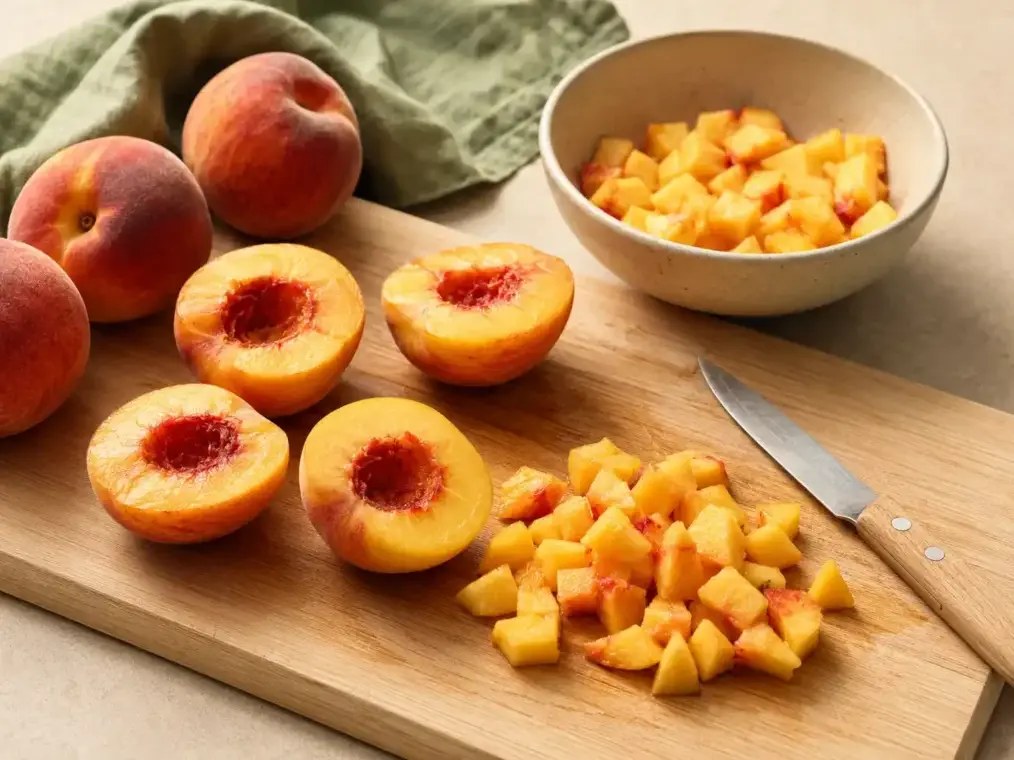
- Prepare the peaches. Peel, pit, and finely chop 2 pounds of ripe peaches. Measure approximately 4 cups of prepared fruit.
- Combine the ingredients. Place the chopped peaches, 3/4 cup granulated sugar, and 1 tablespoon fresh lemon juice in a wide, heavy-bottomed saucepan.
- Let the peaches release their juices. Stir the mixture and allow it to rest for 5 to 10 minutes. The sugar will begin drawing moisture from the peaches.
- Bring the mixture to a gentle boil. Place the saucepan over medium heat. Stir frequently as the fruit begins to soften and release more liquid.
- Mash the peaches. Use a potato masher or the back of a sturdy spoon to break down the softened fruit. Mash thoroughly for a smoother jam or leave a few small pieces for texture.
- Reduce the jam. Continue cooking uncovered for approximately 17 to 25 minutes. Stir more frequently near the end to prevent the fruit from sticking or scorching.
- Test the consistency. Remove the saucepan from the heat and place a small spoonful of jam on a chilled plate. Wait approximately 1 minute, then run your finger through the center.
- Check the line. The jam is ready when the line remains visible and the mixture does not immediately flow back together.
- Cool and refrigerate. Let the jam cool for 10 to 15 minutes. Transfer it to a clean container and allow it to cool completely before covering and refrigerating.
The exact cooking time depends on the ripeness and moisture content of the peaches, the width of the saucepan, and the strength of the heat.
How to Tell When Peach Jam Is Done
The jam should look glossy, appear noticeably reduced, and fall from a spoon in thick drops rather than running like peach juice.
You can also drag a spatula across the bottom of the saucepan. The jam is close to ready when the spatula leaves a visible path that takes a moment to fill.
The Chilled-Plate Test
Place a small plate in the freezer before you begin cooking. When the jam appears thick, remove the saucepan from the heat and spoon a small amount onto the cold plate.
Wait approximately 1 minute, then run your finger through the center. The jam is ready when the line remains visible and the mixture does not immediately flow back together.
The National Center for Home Food Preservation describes a refrigerator or freezer plate test as one method for evaluating fruit spreads prepared without added pectin.
Do not rely only on cooking time. A wide saucepan encourages faster evaporation, while juicy peaches or a narrow pan can lengthen the cooking process.
Peach Jam Troubleshooting
| Problem | Likely Cause | What to Do |
|---|---|---|
| Jam is runny after cooling | The peaches contained extra moisture or the mixture did not cook long enough | Return it to a wide saucepan and cook for another 2 to 3 minutes before repeating the chilled-plate test |
| Jam is too thick | The mixture cooked too long or too much moisture evaporated | Use it as a pastry filling or loosen an individual serving with a small amount of warm water |
| Jam scorched on the bottom | The heat was too high or the mixture was not stirred frequently enough | Use a heavy-bottomed saucepan and stir more often as the jam thickens |
| Frozen peaches stay watery | Excess thawing liquid was included | Drain the fruit before measuring and allow additional cooking time |
| Jam looks dull or brown | The fruit was overcooked or exposed to air for too long | Stop cooking once the correct consistency is reached and store the cooled jam in an airtight container |
| Jam is softer than expected | The recipe contains less sugar and no commercial pectin | Allow it to chill completely and expect a soft-set texture rather than a firm commercial-style gel |
How to Fix Runny Peach Jam
Hot jam naturally looks thinner than cooled jam. Let it cool completely and refrigerate it for several hours before deciding whether it needs additional cooking.
If the chilled jam remains too loose, return it to a wide saucepan and simmer it over medium-low heat for another 2 to 3 minutes. Stir frequently and repeat the chilled-plate test.
Continue cooking in short intervals rather than adding a large amount of extra sugar. Additional sugar can make the jam overly sweet without guaranteeing the desired texture.
A soft batch is still useful. Spoon it over yogurt, pancakes, waffles, oatmeal, ice cream, cheesecake, or pound cake as a homemade peach sauce.
Peach Jam Variations
Use the basic peach jam as a starting point, then add one simple flavor variation.
- Vanilla peach jam: Stir in 1 teaspoon of vanilla extract after removing the saucepan from the heat.
- Cinnamon peach jam: Add 1/4 teaspoon of ground cinnamon while the fruit cooks.
- Ginger peach jam: Add 1/2 teaspoon of finely grated fresh ginger with the peaches.
- Peach raspberry jam: Replace 1 cup of chopped peaches with fresh or frozen raspberries.
- Peach blueberry jam: Replace 1 cup of chopped peaches with blueberries.
- Chunky peach jam: Cut the fruit into slightly larger pieces and mash only part of the mixture.
- Smooth peach jam: Carefully blend the cooked peaches with an immersion blender before completing the final consistency test.
Add only one or two flavorings at a time so the peach flavor remains noticeable.
Changing the fruit or other ingredients changes the formula. These variations must remain refrigerated or frozen and should not be treated as shelf-stable canning recipes.
Peach Jam vs. Peach Preserves
Peach jam and peach preserves use similar ingredients, but their final textures are different.
Peach jam is made with finely chopped, mashed, or blended fruit. It has a soft, spreadable texture with relatively small pieces distributed throughout the mixture.
Peach preserves usually contain larger pieces or slices of fruit suspended in a thick syrup or gel. They have a more rustic texture and a clearer contrast between the fruit pieces and the surrounding spread.
The University of Minnesota Extension’s guide to fruit spreads similarly distinguishes jam, which uses crushed or ground fruit, from preserves containing whole fruit or larger fruit pieces.
For a smoother jam, mash the peaches thoroughly. For a preserves-style texture, cut the fruit into larger pieces and mash only part of the mixture.
Storage and Freezing
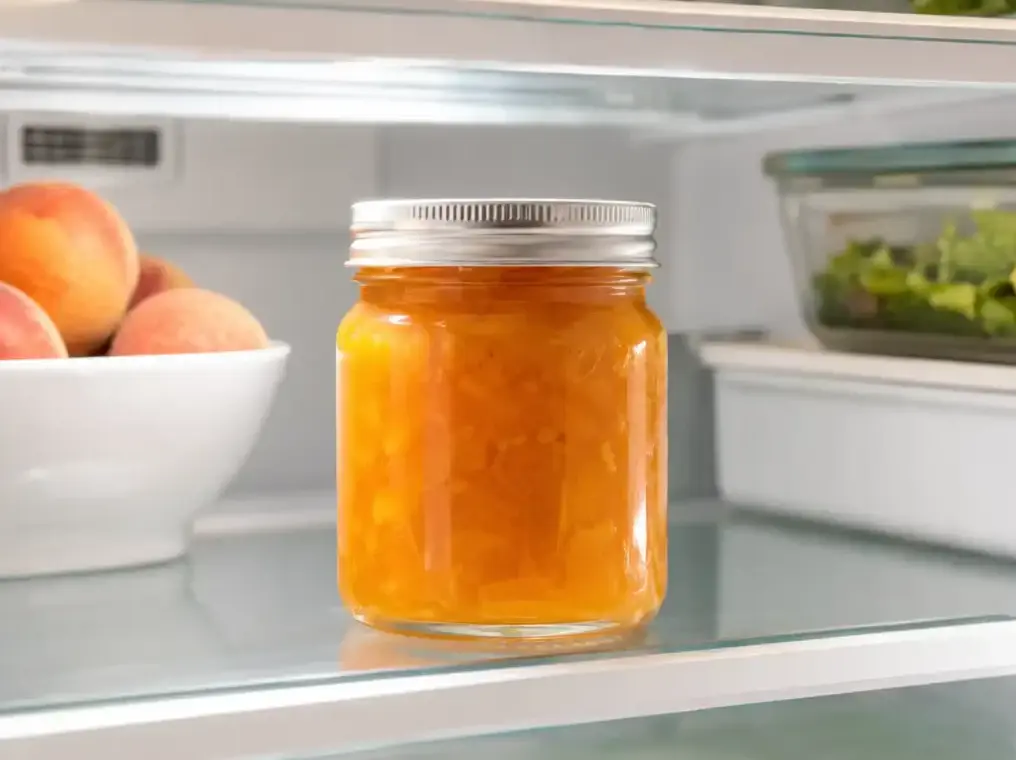
Allow the jam to cool before transferring it to a clean, airtight container. Store it in a refrigerator maintained at 40°F or below.
For the best quality, use the refrigerated jam within 2 weeks. Always serve it with a clean spoon and return the container to the refrigerator promptly.
Reduced-sugar spreads can lose color, texture, and quality more quickly than traditional full-sugar jam. The National Center for Home Food Preservation’s jam and jelly guidance notes that refrigerator and freezer fruit spreads require cold storage and that reduced-sugar products may deteriorate more quickly.
To freeze the jam, divide it among freezer-safe containers and leave approximately 1/2 inch of space at the top for expansion. Freeze for up to 1 year for the best quality.
Penn State Extension’s fruit-spread guidance also explains that jams not processed for shelf stability must remain in the refrigerator or freezer.
Thaw frozen peach jam overnight in the refrigerator. Stir it before serving because the texture may become slightly softer after freezing and thawing.
Discard the entire container if you notice mold, bubbling, fermentation, an unusual odor, or another sign of spoilage. Do not remove visible mold and consume the remaining jam.
Ways to Use Peach Jam
- Spread it on toast, biscuits, English muffins, or croissants.
- Spoon it over pancakes, waffles, or French toast.
- Swirl it into oatmeal, yogurt, or cottage cheese.
- Use it as a filling for thumbprint cookies or sandwich cookies.
- Layer it into yogurt parfaits or no-bake desserts.
- Spoon it over vanilla ice cream, cheesecake, or pound cake.
- Serve it with crackers and mild cheeses.
- Stir a small amount into a homemade vinaigrette.
- Combine it with mustard, lemon juice, or spices to make a glaze for baked chicken.
- Add a spoonful to a peach smoothie.
Frequently Asked Questions
Can You Make Peach Jam Without Pectin?
Yes. Peaches, sugar, and lemon juice can be cooked until enough moisture evaporates to produce a thick, spreadable fruit mixture.
Because peaches contain little natural pectin, the result will usually be softer and less firmly gelled than traditional peach jam made with commercial pectin.
Can I Leave the Peach Skins On?
Yes. Leaving the skins on saves preparation time and creates a more rustic texture. Chop the peaches finely or briefly blend the cooked mixture if you want the skin pieces to be less noticeable.
Can I Reduce the Sugar Further?
Reducing the sugar may create a thinner consistency and can change the color, flavor, and storage quality. For the most consistent result, use the amount listed in the recipe.
Do not reduce the sugar and then attempt to make the recipe shelf-stable. The NCHFP guidance for reduced-sugar fruit spreads recommends refrigeration or freezing for experimental formulas that have not been scientifically tested for canning.
Can I Double This Peach Jam Recipe?
It is better to prepare two separate batches. A larger quantity takes longer to reduce and may cook unevenly, making it more difficult to reach the correct consistency without overcooking the peaches.
Can I Use Frozen Peaches?
Yes. Thaw the peaches completely, drain excess liquid, and measure the fruit after thawing. Frozen peaches may require a few additional minutes of cooking and generally produce a smoother texture.
Can I Can This Peach Jam for Pantry Storage?
No. This specific small-batch recipe contains no commercial pectin, uses a reduced amount of sugar, and has not been scientifically tested for shelf-stable canning.
For pantry storage, use a tested recipe without changing its ingredient ratios or processing method. The NCHFP tested peach jam recipe uses commercial pectin, more lemon juice, substantially more sugar, a specific headspace, and altitude-adjusted boiling-water processing times.
Related Recipes
- Peach Crisp: Turn ripe peaches into a warm summer dessert with a buttery oat topping.
Food Safety and Preservation Sources
This recipe is intended as a cooked refrigerator fruit spread. The following university and government-supported resources were consulted for information about pectin, consistency testing, cold storage, peach preparation, and shelf-stable canning:
- National Center for Home Food Preservation: Making Reduced-Sugar Fruit Spreads
- National Center for Home Food Preservation: Testing Jelly Without Added Pectin
- National Center for Home Food Preservation: Tested Peach Jam With Pectin
- Oregon State University Extension: Preserving Peaches
- University of Minnesota Extension: Fruit Spreads
- Penn State Extension: Jelly, Jam and Fruit Spreads
Easy Homemade Peach Jam Recipe (No Pectin)
Ingredients
Equipment
Method
- Add the chopped peaches and lemon juice to a medium saucepan. Bring the mixture to a boil over medium-high heat, using a spatula or potato masher to crush the peaches to your preferred consistency.
- Reduce the heat to medium. Add the sugar to the peach mixture and stir until it is fully dissolved.
- Bring the peaches back to a full rolling boil, stirring frequently to prevent the fruit and sugar from sticking to the bottom of the saucepan.
- Continue boiling and stirring until the peaches have broken down and the mixture has thickened, about 15 to 20 minutes. The jam will continue to thicken as it cools.
- To test the consistency, place a small spoonful of jam on a chilled plate. Let it cool briefly, then run a finger through it. The jam is ready when the line remains visible and the mixture does not immediately flow back together.
- Remove the saucepan from the heat and carefully spoon or ladle the hot jam into clean, sterilized jars. Leave a little space at the top of each jar and secure the lids.
- Allow the jam to cool completely before refrigerating. Serve chilled or at room temperature.